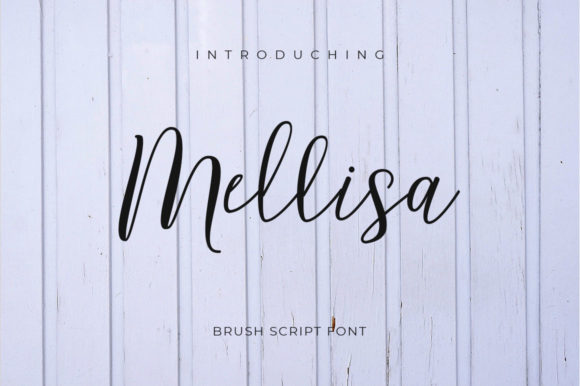
Mellisa Font: Where Script Style Meets Modern Design Needs
Finding a script font that balances authentic personality with practical versatility is a common challenge. Many decorative typefaces look beautiful in isolation but fall short when applied to real-world projects, where legibility and consistency are paramount. Mellisa is a premium font designed to bridge that gap, offering a flowing, connected style that feels both personal and polished. Its design leans into a modern script aesthetic—less formal than traditional calligraphy, yet more refined than a casual handwritten font. This makes it a compelling choice for designers and creators who need a typeface with character that doesn't sacrifice clarity.
The visual appeal of Mellisa lies in its carefully crafted letterforms. Each character connects with a natural, rhythmic flow, creating a sense of movement and elegance. The strokes vary in thickness, providing a subtle contrast that adds depth and prevents the text from looking flat or overly simplistic. While it's undeniably a script font, its design avoids the overly ornate swashes that can hinder readability. The result is a typeface that feels approachable and contemporary, suitable for applications where a human touch is desired without appearing overly casual or dated. It’s this balance that positions Mellisa as a valuable creative font in a designer's toolkit.
Practical Applications: From Wedding Invitations to Brand Identities
The true test of any display font is its performance across diverse projects. Mellisa shines in contexts that demand a personalized, handcrafted feel. Consider its use in wedding invitations, where its flowing script sets a romantic and intimate tone for the event. The same quality translates beautifully to thank you cards, greeting cards, and event stationery, creating a cohesive and memorable aesthetic. For entrepreneurs and small business owners, Mellisa can be a strategic asset in logo design and brand identity work, particularly for businesses in the lifestyle, beauty, artisan, or boutique sectors. It helps craft a brand personality that feels authentic, warm, and customer-focused.
Beyond personal stationery, this script font finds its place in editorial design and packaging design. Imagine it used for pull quotes in a magazine layout, chapter headings in a cookbook, or the primary logo on a boutique candle label. Its style injects personality into layouts that might otherwise feel sterile. In the digital realm, Mellisa can enhance social media graphics and website headers, drawing the eye and conveying a specific mood. However, practical application requires thoughtful consideration. Its flowing nature means it's best used for headlines, titles, or short phrases rather than extended body copy, where a clean sans serif font or a highly legible serif font would ensure comfortable reading.
Strategic Integration: Pairing, Readability, and Professional Execution
Integrating a distinctive font like Mellisa into a design system requires a strategic approach to font pairing. The goal is to create contrast and hierarchy without conflict. A robust sans serif font with a neutral, clean character often makes an ideal companion. For example, pairing Mellisa with a geometric sans serif like Montserrat or a humanist sans serif like Lato creates a clear visual distinction: Mellisa handles the expressive, emotive headlines, while the sans serif manages the informative, readable body text. This pairing strategy is fundamental to modern typography and ensures your designs are both beautiful and functional.
Readability is a non-negotiable consideration. While Mellisa is designed for clarity at display sizes, testing it in context is crucial. Evaluate the spacing between letters and words, especially in longer phrases. Check its performance on different backgrounds and at various scales, from a small social media icon to a large printed banner. The fact that Mellisa is PUA encoded is a significant practical advantage. This means all stylistic alternates and swashes are fully accessible in any standard design software, allowing for advanced customization. You can substitute specific letters to avoid awkward connections or add flourish to initials, giving you precise control over the final typographic presentation.
Before committing to a commercial font for a client project or a product line, always review the licensing terms. Ensure the license covers your intended use, whether it's for digital products, physical merchandise, or client work. Mellisa, as a professional design asset, typically comes with clear licensing options. When used thoughtfully, it becomes more than just a decorative element; it becomes a core component of a visual language that enhances brand perception, supports visual hierarchy, and fosters audience engagement. It’s a tool for telling a more compelling story, one carefully chosen word at a time.