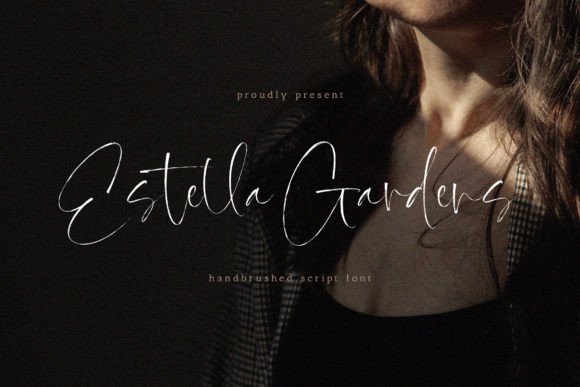
Estella Gardens: Hand-Brushed Script for Timeless Design
In a digital world saturated with clean, geometric sans serifs and rigid serifs, there's a yearning for something with a heartbeat. Something that feels crafted, not generated. This is the space Estella Gardens occupies. It’s not merely a typeface; it’s a piece of visual storytelling. As a premium font, it moves beyond basic utility to become a central character in your design narrative, offering a blend of organic warmth and sophisticated structure that’s increasingly rare.
The Anatomy of a Character: What Makes Estella Gardens Unique
At its core, Estella Gardens is a hand-brushed script font. But that simple label doesn’t capture its nuance. Imagine the confident flow of a calligrapher’s brush, where pressure and speed create a dynamic, living line. The strokes in Estella Gardens aren’t perfectly uniform; they have a subtle texture and a graceful, intentional irregularity. This is the "hand" in the brush—each letter feels individually considered, contributing to a texture that’s warm and approachable.
The curves are particularly noteworthy. They avoid the overly swirly, decorative loops that can date a script font. Instead, they possess an elegant, flowing rhythm that feels both modern and timeless. The letter connections are fluid, promoting excellent readability for a script, while the overall x-height provides a solid, stable foundation. This balance is key: it’s expressive enough to add personality but structured enough to remain legible in practical applications. It’s a creative font that doesn’t sacrifice function for form.
Where Your Story Finds Its Voice: Practical Applications
Understanding a font's personality is one thing; knowing where to deploy it is another. Estella Gardens shines where emotion, elegance, and authenticity are paramount. Think of it as the typographic equivalent of a bespoke suit or a handwritten note on quality stationery—it elevates the perceived value of the message.
In brand identity, it’s a powerful tool for businesses that want to convey craftsmanship, luxury, or personal connection. A boutique bakery, a high-end wedding planner, a artisanal skincare line, or a specialty coffee roaster could build a stunning logo design around Estella Gardens, pairing it with a clean sans serif font for body text to create a beautiful contrast between the handmade and the modern.
For editorial design and publishing, consider its use for chapter titles in a novel, pull quotes in a magazine, or the masthead of a lifestyle blog. It adds a layer of visual interest and breaks the monotony of standard serif or sans serif layouts. In packaging design, it can transform a simple label into a story, making a product feel more personal and considered on a crowded shelf.
Digital applications are equally compelling. For web design, it’s perfect for hero text, section headers, or call-to-action buttons where you need to draw the eye and evoke a specific feeling. As part of your social media graphics toolkit, it can make quotes, announcements, and promotional posts stand out in a fast-scrolling feed, adding a touch of artistry that generic fonts lack.
Strategic Typography: Influence Beyond Aesthetics
Choosing a font like Estella Gardens is a strategic decision that influences how your audience perceives and interacts with your content. It directly impacts visual hierarchy. A bold, elegant script naturally draws the eye, making it ideal for headlines, subheads, or key phrases you want to emphasize. This creates a clear reading path and adds rhythm to your layout.
The font also profoundly affects brand perception. Consistent use of a distinctive typeface like this builds recognition and communicates your brand’s values. It says you value beauty, attention to detail, and a human touch. This fosters a stronger emotional connection with your audience, which is the bedrock of audience engagement. People remember how a design makes them feel, and Estella Gardens evokes feelings of elegance, care, and bespoke quality.
However, this influence comes with responsibility. Overusing such a distinctive display font can overwhelm a design. It’s a soloist, not the entire orchestra. Its strength is in strategic accents. The key is to use it to highlight, not to shout. This careful application enhances rather than hinders readability, ensuring your beautiful typography doesn’t get in the way of your message.
A Designer’s Checklist for Implementation
Ready to explore Estella Gardens for your project? Here’s a practical guide to integrating it effectively:
- Evaluate the Fit: Does your project’s personality align with the font’s? It’s perfect for themes of elegance, nature, romance, craftsmanship, and luxury. It may be less suited for ultra-technical, minimalist, or child-focused contexts.
- Master the Font Pairing: This is crucial. Let Estella Gardens be the star. Pair it with a simple, neutral serif font (like a Garamond or a modern transitional serif) for a classic feel, or a geometric sans serif font (like a Futura or a clean grotesque) for a contemporary contrast. Avoid pairing it with other decorative or script fonts.
- Review the Full Package: A quality commercial font often includes more than just the basic alphabet. Check for stylistic alternates, ligatures (special character combinations like "th" or "fl"), and swashes. These extra design assets give you more creative control to customize the look and avoid repetitive letterforms in headlines.
- Test for Context: Always test the font at the size and in the medium it will be used. How does it look on a mobile screen? Does it hold up when printed small on a business card? Ensure the typeface remains legible and retains its character in your specific application.
- Understand the License: For any professional or commercial project, ensure you have the correct license. A proper premium font license covers your intended use—whether for a client, for products for sale, or for digital advertising—protecting both you and the font creator.
In the end, Estella Gardens is more than a set of glyphs. It’s a tool for adding a layer of human touch and narrative depth to modern typography. By understanding its personality and applying it with intention, you can transform ordinary text into visual poetry that resonates, connects, and endures.