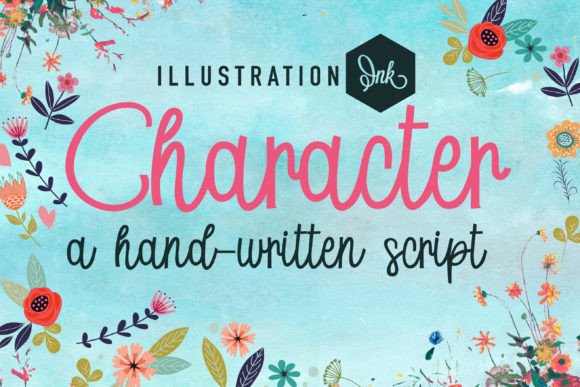
Character: A Hand-Crafted Script Font with Casual Uppercase Style
Understanding the Personality Behind the Font
When you first see Character, you notice something immediately: this isn't a stiff, corporate typeface trying to fit into a boardroom. It's a hand-crafted script font that carries the warmth of real pen strokes, but with a twist. The uppercase letters have a distinct print-like quality—legible, confident, and approachable—while the lowercase flows with the organic rhythm you'd expect from something written by hand. That combination makes Character feel both personal and practical, which is rare in the world of handwritten fonts.
What sets Character apart from dozens of other script fonts is its balance. Many handwritten typefaces lean too far into whimsy, making them hard to read at smaller sizes or inappropriate for professional contexts. Others feel so polished they lose the human touch entirely. Character sits in a sweet spot. The casual uppercase gives it structure, and the script lowercase gives it soul. You can use it for a bakery logo, a wedding invitation, a social media quote graphic, or a product label—and it feels right at home in each scenario.
For designers, entrepreneurs, and content creators, that versatility matters. You don't always want to hunt through your library of design assets for a different font every time a project shifts tone. Character adapts. It has personality without being loud about it.
Where Character Shines Across Creative Projects
Let's talk about real-world applications, because that's where a font proves its worth.
Branding and Logo Design
If you're building a brand identity for a small business, a lifestyle product, or a creative service, Character offers an inviting starting point. The hand-crafted quality signals authenticity—think artisan goods, boutique studios, or independent consultants. It works particularly well for logos that need to feel approachable without sacrificing professionalism. Pair it with a clean sans serif font for body text, and you've got a visual system that communicates warmth and reliability simultaneously.
Packaging Design
On product labels, especially for food, cosmetics, or handmade items, Character's casual uppercase catches the eye while remaining readable. The script lowercase adds a layer of craft that reinforces the "made with care" message many small brands want to convey. It's the kind of creative font that makes a shelf presence feel curated rather than mass-produced.
Editorial and Publishing
For bloggers, magazine designers, and publishers, Character works beautifully for pull quotes, section headers, and feature titles. It draws the reader's eye without overwhelming the page. In editorial design, visual hierarchy is everything, and a well-placed handwritten font can break up dense text blocks and give the layout breathing room. Just remember: Character is a display font at heart. Use it for headlines and accents, not for running body copy.
Web Design and Digital Content
Online, fonts need to load quickly and render clearly across devices. If you're using Character for a website header or a landing page hero section, test it at various screen sizes. The print-like uppercase holds up well on mobile, which is a genuine advantage over more ornate script fonts that can blur or collapse on smaller screens. For social media graphics, Character is a natural fit—Instagram quotes, Pinterest pins, YouTube thumbnails, and email headers all benefit from its friendly, hand-lettered aesthetic.
Personal and Commercial Projects
Crafters and hobbyists will appreciate Character for invitations, greeting cards, scrapbooking, and printable wall art. The lite version included with the package makes it easy to test before committing to the full premium font. For commercial use—think merchandise, client work, or products sold on Etsy—make sure you review the licensing terms. A commercial font license protects you and ensures the designer behind Character gets fairly compensated for their work.
How a Font Like Character Influences Perception
Typography isn't just decoration. The typeface you choose shapes how people interpret your message before they read a single word. Character, with its hand-crafted script style, communicates approachability, creativity, and human presence. That's powerful in a digital landscape saturated with sterile, template-driven design.
When a small business uses Character on its packaging or website, it subtly tells the customer: a real person made this. That emotional resonance drives engagement. People linger longer on content that feels personal. They share graphics that feel crafted rather than generated. They trust brands that look human.
At the same time, readability can't be an afterthought. The print-like uppercase in Character helps maintain clarity, but you still need to test your specific use case. Set your headline, step back, and ask: can someone read this in three seconds? If the answer is yes, you're in good shape. If the letters blur together or the word spacing feels off, adjust your tracking or try a different size.
Font pairing is another consideration worth your attention. Character plays well with geometric sans serif fonts and traditional serif fonts alike. A modern sans serif in the body text grounds the organic energy of the script, while a classic serif can create an elegant contrast for editorial layouts. Avoid pairing it with another script font—that's a recipe for visual chaos.
Practical Tips for Choosing and Using Character
Before you commit to any creative font for a project, run through a simple evaluation process:
- Define the mood. Does your project call for warmth and personality, or does it need sharp minimalism? Character fits the first category beautifully.
- Test at actual size. Set the font at the size you'll actually use—whether that's a 72-point headline or a 24-point subheading—and check legibility on screen and in print.
- Review the full character set. Look at what's included: ligatures, alternates, punctuation, numerals, and language support. The lite version gives you a starting point, but the full premium font unlocks the complete range.
- Check the licensing. If you're using Character for client work, merchandise, or any commercial application, confirm the license covers your intended use. Most premium font licenses are straightforward, but it's worth verifying.
- Build a pairing. Choose a complementary body font before finalizing your design. A strong font pairing creates cohesion across your entire brand identity or publication layout.
Character isn't trying to be everything. It's a hand-crafted script font with a casual, print-inspired uppercase—and it does that job exceptionally well. Whether you're designing a logo, laying out a magazine spread, creating social media graphics, or packaging handmade products, it brings a human touch that resonates with audiences who are tired of generic design. Use it thoughtfully, pair it wisely, and let it do what it does best: make your work feel like it was made by someone who cares.