Cassella: The Enchanting Handwritten Font for Modern Projects
There's a particular warmth that a handwritten font brings to a project—it's the feeling of a personal note, a human touch in a digital world. Cassella is an enchanting handwritten font that captures this feeling with remarkable elegance. It's not just another script typeface; it's a versatile tool designed to inject a romantic, sophisticated feel into a wide array of creative work. As a premium font, its strength lies in its ability to feel both personal and polished, making it a valuable asset for designers, entrepreneurs, and creators looking to elevate their brand identity with authentic typography.
The Visual Soul of Cassella: More Than Just a Script
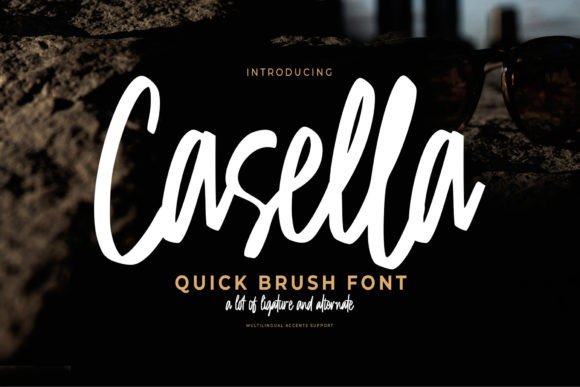
At first glance, Cassella presents a flowing, connected script that feels naturally penned. Its letterforms feature graceful, sweeping strokes with a subtle variation in thickness, mimicking the pressure of a real ink pen on paper. This isn't a rigid or overly formal calligraphy; it's a modern, relaxed take on classic script fonts. The overall personality is romantic, approachable, and undeniably stylish. The connections between letters are fluid, which helps maintain a sense of movement and cohesion, even when used for longer phrases. This careful balance is what makes it a standout creative font—it avoids the common pitfalls of being either too casual or too ornate.
Understanding its visual characteristics is key to using it effectively. The font's x-height is generally comfortable, and its ascenders and descenders are elegantly elongated, contributing to its airy feel. This makes it particularly well-suited for display purposes where you want the typography itself to be a focal point. When considering Cassella for a project, look at how its natural curves and gentle slant can complement or contrast with other design elements you're using. It’s a typeface that doesn't just convey words; it conveys mood and intention.
Where Cassella Truly Shines: Practical Applications
The versatility of Cassella is one of its greatest assets. It moves seamlessly across different mediums, making it a smart choice for a variety of projects. Think of it as a design chameleon—its core romantic style adapts to the context, whether it's a luxurious brand or a heartfelt personal project.
- Branding & Logo Design: For businesses in the wedding, beauty, lifestyle, or artisanal food industries, Cassella can form the cornerstone of a beautiful brand identity. It works exceptionally well for logotypes, especially when paired with a clean sans serif font for body text. The font helps establish a perception of quality, care, and personal attention.
- Marketing & Social Media: In the fast-paced world of social media, a post needs to stop the scroll. Using Cassella for headlines, quotes, or call-to-action phrases in graphics can instantly add a layer of sophistication and emotional appeal. It’s perfect for Instagram stories, Pinterest pins, and Facebook ads that aim to feel aspirational and personal.
- Publishing & Editorial Design: In editorial design, such as magazine layouts, book covers, or blog headers, Cassella can be used to create striking pull quotes, chapter titles, or feature headlines. It provides a beautiful contrast to a traditional serif font or a modern sans serif, helping to establish a clear visual hierarchy that guides the reader's eye.
- Packaging & Physical Products: The romantic feel of this handwritten font translates beautifully to print. Imagine it on coffee bags for a boutique roaster, labels for handmade candles, or packaging for artisan chocolates. It communicates craftsmanship and a story behind the product, which is a powerful tool in packaging design.
- Personal & Craft Projects: Beyond commercial use, Cassella is a joy for personal projects. It elevates wedding invitations, greeting cards, and personalized stationery. For crafters and hobbyists, it’s a fantastic design asset for creating custom prints, decals, or digital planners that feel special and curated.
Integrating Cassella into Your Design Workflow
Choosing a font is a strategic decision. Simply liking the look of Cassella isn't enough; it needs to be the right fit for your specific goals and audience. Here’s some practical guidance on evaluating and implementing this premium font effectively.
Evaluating Fit and Font Pairings
Before committing, ask yourself what emotion you want to evoke. Cassella excels at conveying romance, elegance, and a personal touch. If your brand is ultra-minimalist, tech-focused, or industrial, it might create a stylistic clash. However, for most lifestyle-oriented projects, it's a strong contender.
A critical step is testing font pairings. A script font like Cassella should rarely be used for large blocks of body text due to readability concerns. Its strength is in headlines and short, impactful phrases. Pair it with a highly legible font for supporting copy. A classic combination is Cassella with a sturdy serif font like Georgia or Lora for a traditional, editorial feel. For a more contemporary look, pair it with a clean, geometric sans serif like Montserrat or Open Sans. The contrast in styles creates a dynamic and professional typographic system.
Readability, Styles, and Licensing
Always test readability at the size you intend to use it. While Cassella is designed for clarity in display contexts, ensure the letter spacing (tracking) works for your layout. Check if the font family includes alternative characters, ligatures, or stylistic sets—these are valuable tools that allow for customization and can make your typography feel even more unique.
Finally, understand the licensing. As a commercial font, Cassella comes with a license that dictates how you can use it. If you're using it for a client's logo, a product for sale, or a website, you need to ensure the license covers that use. This is a non-negotiable part of professional practice and protects both you and the font creator. Investing in a properly licensed font is investing in the professionalism and legal safety of your project.
In the end, a typeface like Cassella is more than just a set of letters. It's a design asset that carries personality and intent. Used thoughtfully, it can transform a simple layout into an engaging visual experience, building a stronger connection with your audience and solidifying the aesthetic of your brand identity. Its true value is unlocked not by its features alone, but by how skillfully it's integrated into a larger design vision.