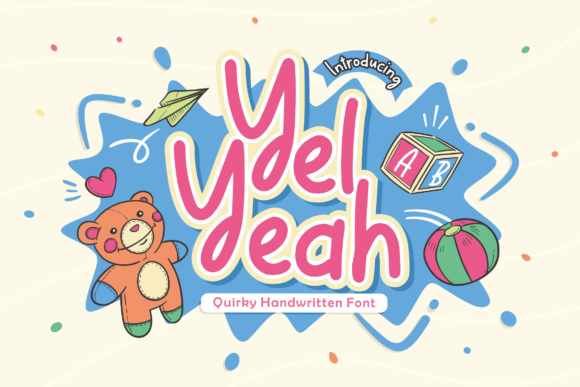
Yel Yeah: Adding Whimsy and Authenticity to Your Designs
In a world saturated with sterile, geometric sans serif fonts and predictable serif choices, finding a typeface that feels genuinely human can be a game-changer. If you’ve been scrolling through endless libraries of premium font options looking for something that bridges the gap between professional polish and handwritten warmth, you might want to take a closer look at Yel Yeah. It’s not just another script font; it’s a visual exhale—a whimsical, relaxed typeface that manages to be both lovely and incredibly versatile.
Whether you are a graphic designer working on complex branding projects, a small business owner trying to find your visual voice, or a content creator looking to spice up social media graphics, understanding how to leverage a font like this is crucial. Let’s dive into the anatomy of Yel Yeah, explore where it shines, and discuss how to integrate it into your workflow without sacrificing readability or professionalism.
The Anatomy of a Relaxed Typeface
At its core, Yel Yeah is a handwritten font that avoids the common pitfalls of the genre. Often, script fonts can be too scratchy, too formal, or too messy to be useful in a commercial setting. Yel Yeah strikes a balance. It features a lovely style characterized by smooth, flowing curves and a consistent baseline that keeps the eye moving forward. It doesn’t scream for attention; rather, it invites the reader in.
What makes it a standout creative font is its personality. It feels approachable and authentic. In modern typography, we are seeing a massive shift toward "anti-design" and authenticity. Audiences are tired of corporate rigidity. They want to feel a connection. Yel Yeah provides that connection instantly. It mimics the natural inconsistencies of human handwriting but polishes them just enough to ensure it remains legible at various sizes. This makes it an incredibly invaluable asset to any fonts library, as it can elevate a mundane layout into something that feels personal and bespoke.
Strategic Applications: Where to Use Yel Yeah
Knowing a font looks nice is one thing; knowing how to use it effectively is another. The strength of Yel Yeah lies in its versatility across different mediums, provided you use it for the right jobs. Here is how different professionals can leverage this typeface.
Branding and Logo Design
For brand identity projects, especially those targeting lifestyle, wellness, fashion, or artisanal food markets, Yel Yeah is a strong contender. A logo design needs to be memorable, and this font offers a distinct silhouette. It works beautifully for logos that need to convey a "mom-and-pop" feel or a high-end boutique vibe. However, remember that script fonts in logos often require careful kerning. Ensure the letters breathe so the logo remains scalable.
Editorial and Packaging Design
In editorial design, such as magazine headers or pull quotes, this font adds a layer of intimacy. It breaks the monotony of body text. Similarly, in packaging design, Yel Yeah excels. Imagine this script on a coffee bag, a candle label, or a bakery box. It suggests that the product inside was made with care. It tells a story before the customer even reads the ingredients.
Digital Presence: Web and Social
For web design, caution is key. You wouldn’t set an entire blog post in a script font—that’s a recipe for eye strain. Instead, use Yel Yeah for H1 headers, hero text, or specific call-to-action buttons where you want to inject personality. On social media graphics, however, you can be bolder. It is perfect for Instagram quotes, sale announcements, and story overlays where the viewing time is short and the impact needs to be immediate.
Mastering Font Pairings and Visual Hierarchy
A common mistake with script fonts is using them in isolation or pairing them with the wrong partner. Yel Yeah has a lot of movement, so it needs an anchor. This is where font pairing becomes essential.
The Rule of Contrast: Because Yel Yeah is a display font with a lot of character, it pairs best with clean, neutral typefaces. Try matching it with a geometric sans serif font like Montserrat or Lato for a modern look. The clean lines of the sans serif will allow the whimsy of Yel Yeah to pop without creating visual chaos. Alternatively, pairing it with a sturdy, traditional serif font like Garamond can create a sophisticated, "lifestyle magazine" aesthetic.
Visual Hierarchy: Use Yel Yeah to establish hierarchy. It should be the loudest voice in the room, but only for short bursts. Use it for headers, sub-headers, or accent text. Let your body copy remain a standard, highly readable font. This contrast guides the reader's eye naturally from the emotional hook (the script) to the information (the body text).
Practical Considerations for Professionals
Before you commit to integrating Yel Yeah into your next project, there are a few practical boxes to tick. As a commercial font, you need to ensure you have the correct licensing for your specific use case—whether that is for a client’s logo or print-on-demand merchandise.
- Readability Testing: Always test the font at the size it will be viewed. A script font that looks gorgeous on a 27-inch monitor might turn into a blob on a mobile screen or a small product label.
- Color and Background: Yel Yeah works best on solid, contrasting backgrounds. Avoid placing it over busy photographs or complex textures, as the thin swashes can get lost.
- Context Matters: While it is a creative font, it might not be the right fit for a law firm or a fintech startup. Evaluate the personality of the font against the personality of the brand.
Ultimately, Yel Yeah is more than just a design asset; it is a tool for storytelling. It offers a way to humanize digital interfaces and add warmth to physical products. By using it strategically within your typography hierarchy, you can create designs that feel not only professional but also deeply personal. If you are looking to refresh your toolkit with something that feels relaxed yet refined, this typeface is certainly worth the investment.