Revive Vintage Charm with the Hello Radio Font
If you’ve spent any time scrolling through design blogs or exploring creative marketplaces recently, you’ve likely noticed a resurgence in vintage aesthetics. There is a specific warmth to retro designs that modern, ultra-clean minimalism sometimes misses. We are seeing it in logo design, packaging, and social media graphics. This shift isn't just about nostalgia; it's about creating a connection. In a digital world that can feel sterile, a touch of the "human hand" brings brands to life. This is where the right typography becomes your most powerful asset.
The Monoline Script Revival
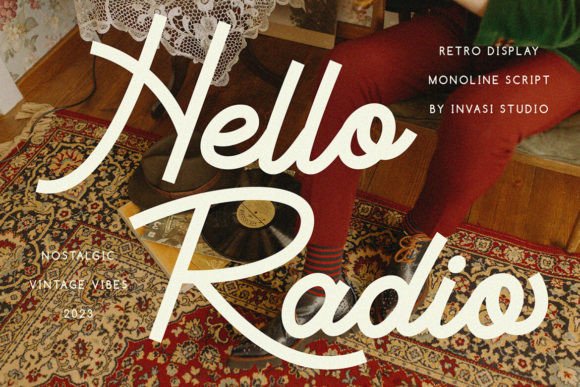
Enter Hello Radio. This premium font captures the essence of mid-century design with a fun, quirky twist. At its core, it is a monoline stroke script. For those less familiar with typography jargon, "monoline" means the stroke width remains consistent throughout the letterform. Unlike traditional calligraphy, which has thick downstrokes and thin upstrokes, this style offers a steady, rhythmic flow. It mimics the look of sign painting or the lettering found on vintage machinery and, true to its name, old radio dials.
What makes this typeface stand out in a crowded market of script fonts? It’s the deliberate imperfection. Every character in the Hello Radio font has a delightful, slightly irregular shape. In modern typography, we often strive for mathematical perfection, but here, the "flaws" are the feature. These organic shapes give your designs a natural, handcrafted feel. It looks like it was written by a person, not generated by a vector pen tool. This tactile quality is essential for brands that want to appear approachable and authentic rather than corporate and distant.
Where Hello Radio Shines: Practical Applications
Understanding a font’s personality is one thing; knowing how to deploy it effectively is another. Hello Radio is a distinct display font, meaning it is designed to be seen at larger sizes where its details can be appreciated. It is not intended for body copy in a novel, but it is a powerhouse for headlines and focal points.
Branding and Logo Design
For entrepreneurs and small business owners, your logo is your handshake. If your brand identity leans toward the eclectic, handmade, or retro, this font is a natural fit. Imagine a craft brewery, a vintage clothing boutique, or a specialty coffee shop. Using Hello Radio for the wordmark instantly communicates a specific vibe: "We care about quality, tradition, and character." It pairs exceptionally well with a sturdy serif font or a clean sans serif font for the tagline, creating a balanced visual hierarchy.
Packaging and Labels
Consider the shelf appeal. In packaging design, you have about three seconds to grab a customer's attention. A monoline script font like Hello Radio adds a layer of sophistication and charm that generic fonts cannot replicate. It works beautifully on labels for artisanal goods—think jams, sauces, or candles. The multilingual support is a massive bonus here. If you are selling products internationally, you can maintain consistent branding across different languages without needing to find a substitute typeface that clashes with your primary design.
Apparel and Merchandise
The apparel industry thrives on awesome lettering. T-shirt designs, tote bags, and hats often rely on typography to carry the message. The "imperfect" nature of Hello Radio gives merchandise a vintage, lived-in feel right out of the box. It suggests a story behind the text. Whether it’s a catchy slogan or a brand name, this font ensures the text feels like a graphic element rather than just words printed on fabric.
Design Strategy and Font Pairing
One of the most common mistakes I see in amateur design is poor font pairing. A script font as expressive as Hello Radio needs the right partner to ground it. Because it has a lot of personality, it can be overwhelming if used for every single element of a design.
The 60-30-10 Rule
When using this font, think of it as your accent. In a typical layout, use a neutral sans serif font (like Helvetica, Futura, or a clean Grotesk) for the bulk of your information—dates, descriptions, and body text. Use a serif font for secondary headers if you want a more editorial look. Then, deploy Hello Radio for the primary headline or the "hero" text. This contrast creates visual interest and ensures your hierarchy is clear. The reader knows exactly where to look first.
Readability and Spacing
While the font is legible at display sizes, keep your audience in mind. If you are designing for older adults or in a context where quick readability is vital (like a highway billboard), use it sparingly. For digital screens, such as website hero images or social media graphics, ensure there is enough contrast between the text and the background. The monoline nature of the script makes it easier to read than more complex, swash-heavy scripts, but kerning (the space between letters) is always worth checking manually when setting large headlines.
Technical Considerations and Licensing
Before incorporating any new asset into your workflow, a quick reality check on the technical side is necessary. As a commercial font, Hello Radio typically comes with specific licensing options. If you are a freelancer creating a logo for a client, you usually need to ensure the license covers the end product. If you are a publisher using it in a template that you sell, you might need an extended license. Always read the fine print to avoid legal headaches down the road.
Furthermore, take a moment to explore the full character map. A high-quality font like this often includes alternate characters, ligatures (special connections between letters), and swashes. These extras are what take a design from "good" to "professional." Swapping out a standard "a" for a stylistic alternate can change the entire flow of a word. Experiment with these features in Adobe Illustrator or Photoshop to see how the letters interact with one another.
Conclusion
Hello Radio is more than just a collection of vectors; it is a design tool for storytelling. In an era of digital noise, it offers a way to cut through with authenticity and warmth. Whether you are refreshing a brand identity, launching a new product line, or creating content for a blog, this font provides a reliable way to inject vintage charm into your work. It bridges the gap between the analog past and the digital present, proving that sometimes, the best way to move forward is to look back.